SMS Marketing in India: A DLT Checklist for Small Businesses
A practical guide for Indian small businesses to plan permission-based SMS, understand TRAI DLT records, choose a provider, control costs and measure results.
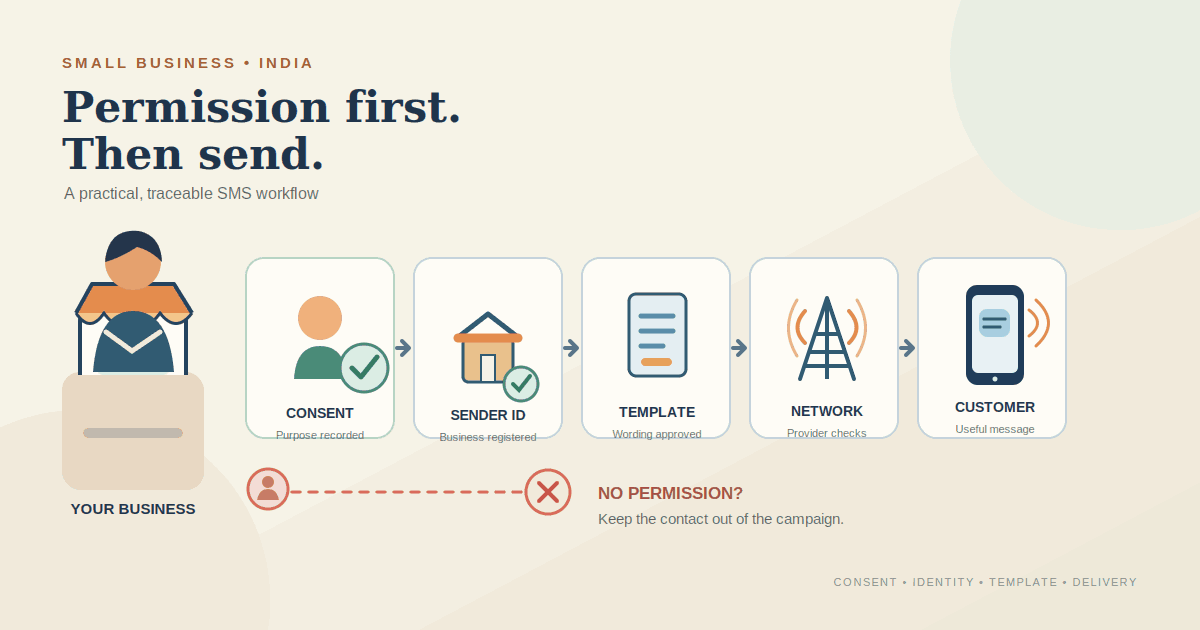
If your business sends promotional or automated SMS to Indian mobile numbers, buying a bulk-message plan is only the last part of the job. You first need to know who the sender is, what kind of message you are sending, which customer permissions apply, and how the message will be identified and checked by telecom providers.
For bulk communication, the Telecom Regulatory Authority of India (TRAI) expects the sender to complete the applicable Principal Entity, header and content-template steps, and to handle consent where required. A messaging vendor can help with the process, but it cannot make an unsuitable customer list or misleading campaign safe. This guide is for owners and marketers who want to launch SMS without building a fragile or non-compliant process.
Start with the job SMS needs to do
SMS is useful when the message is short, time-sensitive and tied to an action: an appointment reminder, an order update, a delivery change, a payment notice, or a limited campaign for people who have agreed to receive offers. It is less suitable for long explanations, frequent general updates or a campaign whose only plan is to send the same offer to every number in an old spreadsheet.
Before speaking to a provider, write down one use case in a sentence. For example: “Send a reminder the day before a booked appointment, with a link to confirm or reschedule.” That is easier to classify, template and measure than “We want to do SMS marketing.”
- Good fit: a clear event or offer, a relevant audience, a useful next step and a measurable outcome.
- Poor fit: purchased lists, vague brand awareness blasts, repeated messages with no preference controls, or a link that the recipient cannot recognise.
If SMS is only one part of your customer communication, keep the channels distinct. The existing business email deliverability guide covers email authentication and list hygiene; those controls are not a substitute for the telecom rules that apply to SMS.
Who is the sender when you use an SMS gateway?
TRAI's framework separates the business sending the communication from the companies that carry it. The business is generally the Principal Entity (PE). A telemarketer or messaging aggregator helps process or deliver the message, while an access provider is the telecom operator that connects it to subscribers.
This distinction matters. If an agency or SMS platform uploads your campaign, the message is still being sent on behalf of your business. Your agreement should say who registers the sender identity, who manages templates and consent records, how recipient preferences are checked, who investigates rejected messages, and how you can retrieve your records if you change vendors.
TRAI's current advice to senders lists the core activities for bulk communication: registration as a Principal Entity, assignment of a header, registration of a content template, transmission of the PE ID, header and content ID to the telecom provider, and consent-template registration and consent acquisition where applicable. The page was last updated on 23 November 2026.
Know what counts as bulk communication
The consolidated TCCCPR text currently defines “bulk” by the number of messages or calls on the same or similar subject: more than 20 in 24 hours, more than 100 in seven days, or more than 300 in 30 days. Those thresholds are useful when you are planning a campaign or automated workflow.
Do not treat the numbers as a blanket permission to send unsolicited commercial messages below the threshold, or as a reason to use employees' personal mobile numbers for campaigns. The same regulations separately define commercial communication by its primary purpose, and TRAI restricts commercial communication to the applicable registered sender and header framework. If your volume is low, or your messages are purely service-related, ask your access provider which provisions and message category apply to that exact use case.
Four records that are easy to confuse
- Principal Entity registration: identifies the business responsible for sending the communication. Keep the legal name, business details and authorised contact consistent with the documents your chosen access provider asks for.
- Header: the sender identity shown to the recipient. TRAI describes a header as an alphanumeric string of up to 11 characters. Use a recognisable business identity and follow the format and approval rules shown by the operator portal.
- Content template: the approved structure of the message itself. It contains fixed wording and, where allowed, variable fields such as a customer name, appointment time or order reference. Keep the wording stable; do not let a campaign tool quietly add extra phrases or links.
- Consent template and consent record: the consent template is the registered wording used to ask for permission. The consent record is evidence that a particular customer gave permission for a stated purpose. Registering a template is not the same as having permission from every person on your list.
TRAI's official list of access-provider portals links to the operator websites used for entity, header and template registration. Start there rather than relying on an old tutorial that may point to a portal or process that has changed.
Build a permission record before you build the campaign
The current consolidated TCCCPR text defines consent as voluntary permission, which may be explicit or inferred, for commercial communication connected to a specific purpose, product or service. For a small business, an explicit opt-in is usually the simplest permission record to explain and maintain. It is a practical recommendation, not a claim that the regulation recognises only one form of consent.
Make the request understandable. Tell the customer which business will contact them, what kind of messages they will receive, and how they can change their choice. Keep the source of the permission, date and time, wording shown, purpose, and withdrawal status alongside the customer record. Do not assume that a phone number collected to complete an order or appointment automatically gives you permission to send unrelated promotions.
Keep operational messages separate from promotions. A reminder that confirms an appointment is different from a reminder that also adds a discount pitch. TRAI's consolidated text places responsibility on the sender to use the correct registered header or special-series resource for the relevant service or transactional communication and not mix promotional content into it. If a message has two purposes, ask the provider to classify it before you register or send it.
Telecom registration also does not replace privacy obligations. The consolidated TCCCPR text expressly says it does not exempt a sender from obligations or liability under the Digital Personal Data Protection Act, 2023. The Act and the 2025 Rules have phased commencement provisions, so check the current commencement notifications and obtain appropriate advice for your business rather than assuming every provision started on the same date.
Choose a provider by its operating controls, not only its rate
A low per-message quote is not useful if you cannot tell why a campaign was rejected, export your consent records or move your sender identity when you change vendors. Ask shortlisted providers for a written answer to these questions:
- Are you registered for the telemarketer functions you perform, and which access-provider route will carry our messages?
- Who completes our PE, header, content-template and consent-template registrations? Which records and IDs will remain under our business account?
- How do you check recipient preferences and consent before a campaign is submitted?
- Can we see message-level status and a useful rejection reason, rather than only a total “sent” count?
- How are links, variable fields, Unicode text and multi-part messages handled under the current operator process?
- What controls protect the account, API credentials, contact lists and templates? Can staff have separate roles?
- What happens to our headers, templates, consent evidence and reporting if we leave?
Also ask who is responsible if a header or content template is misused. The 2026 consolidated regulations add detailed traceability and misuse provisions, and the sender has responsibilities even when a telemarketer is involved. Keep administrator access limited, use named accounts where possible, and remove access promptly when an employee or agency leaves.
Work out the real cost before you commit
There is no safe universal DLT registration price to copy from an old comparison article. The current consolidated regulations allow access providers to specify fees for sender and telemarketer registration and other activities such as header or content-template registration; security deposits may also be specified. Ask the operator or provider for the current written schedule that applies to your account.
Separate the quote into these parts:
- one-time registration, verification or security-deposit charges, if any;
- header, content-template or consent-template charges, if any;
- message charges, including how multi-part or Unicode messages are counted;
- platform, setup, integration or minimum-commitment fees;
- taxes, support and any reporting or CRM add-ons.
Ask whether rejected, failed, retried or undelivered messages are billed, and whether the quote is based on messages submitted, accepted by the operator or confirmed delivered. These are different events. Do not budget from a headline “per SMS” price until you understand what counts as one billable message and what happens when a template is rejected.
Run a small pilot before a full campaign
Once registration and provider setup are complete, test the actual workflow with a small internal group and a limited consenting audience. Do not use the first festive campaign as your template test.
- Freeze the use case. Write down the audience, purpose, message category, desired action and owner who approves the wording.
- Check the records. Confirm the PE ID, header, content-template ID and any required consent-template records are attached to the right business account.
- Test real variables. Use names, dates, order references and links that resemble production values. Check that the final message still matches the registered template.
- Test preference handling. Include a customer who has opted in, a customer who has withdrawn permission, and the relevant preference or do-not-disturb cases for the message type. Ask the provider to show how each is handled.
- Check the recipient experience. Confirm the sender identity is recognisable, the message is readable, the link opens the expected page, and the next step works on a phone.
- Reconcile the report. Compare submitted, accepted, delivered and failed counts. Ask the provider to explain any gap before increasing volume.
If the template needs to change, pause the campaign and register or approve the new version through the required process. Do not ask an operator to “just push it through” because the change is only a sentence or a link.
Measure business outcomes, not just messages sent
A delivery report tells you about the route, not whether the campaign helped the business. Track a small set of measures that match the use case:
- Delivery: accepted, delivered, failed and rejected messages, with reasons where available.
- Response: clicks, replies, calls, bookings or completed forms.
- Commercial result: qualified enquiries, completed orders, attendance or revenue attributable to the campaign.
- Customer cost: opt-outs, complaints, repeat-contact requests and negative feedback.
- Economics: total campaign cost divided by the completed action that matters, such as a confirmed booking or completed purchase.
Use a campaign-specific landing-page URL or code so the result can be connected to the message. If the link is used in a registered template, confirm the current operator's URL or domain approval requirements first. The small-business lead-tracking guide explains how to connect website enquiries to campaign sources; use the same discipline for SMS rather than treating clicks as sales.
Compare the result with a sensible alternative. For appointment reminders, look at attendance and rescheduling, not just clicks. For a promotion, compare incremental orders and margin with the campaign cost. If a message creates many opt-outs or complaints, reduce frequency or stop the campaign even if delivery looks healthy.
Keep the registration healthy after launch
Registration is not a one-time task to forget. The 2026 consolidated TCCCPR text includes annual self-certification of sender registration details, registered headers, content templates and consent templates. It says failure to certify can lead to automatic suspension of the sender or the affected resources. Ask your access provider how it will notify you and who in your business owns the renewal or certification task.
Review the process whenever your legal business details, brand, agency, messaging provider, approved wording or customer-consent method changes. Keep a copy of approved templates, provider agreements, consent evidence, campaign reports and the person responsible for each item. The owner should be able to answer one question quickly: “Can we show why this customer received this message, under which approved template, and who sent it?”
A sensible first campaign
For a small business that has never used bulk SMS, start with one narrow, useful workflow such as appointment reminders or order updates. Confirm the message classification with the provider, complete the required sender and template records, establish the right customer permission, and test the end-to-end journey before sending to a larger group.
Only add promotional campaigns when you can show where the permission came from, how withdrawals are honoured, what the message costs and what business result it produces. If those basics are missing, wait. A smaller, relevant message sent through a controlled process is more valuable than a large campaign that customers do not expect.
Official references and further reading
- TRAI: Advice to Senders — current sender requirements and commercial-communication guidance; last updated 23 November 2026.
- TRAI: Consolidated TCCCPR text (10 November 2026) — current definitions, bulk thresholds, consent, sender responsibilities, annual self-certification and provider fees.
- TRAI: Telecom Service Provider portals — official links for entity, header and template registration.
- TRAI: Advice to Telemarketers — telemarketer roles, headers and message definitions.
- TRAI: Fourth Amendment to TCCCPR, 4 November 2026 — subsequent amendment to the 2018 framework.
- MeitY: Digital Personal Data Protection Act, 2023 and Digital Personal Data Protection Rules, 2025 — check the phased commencement provisions and current notifications.
Regulatory note: This is a practical business guide, not legal advice. TRAI's framework and access-provider implementation can change. The regulatory sources above were checked on 25 November 2026; confirm the current requirements with your access provider and qualified adviser before launching a campaign.
Related articles
Looking for the Best Website Design and Development Company in Lucknow? Meet AKS Techies
From business and WordPress websites to online stores and custom web applications, AKS Techies offers direct developer-led website design and development for businesses in Lucknow.
Read article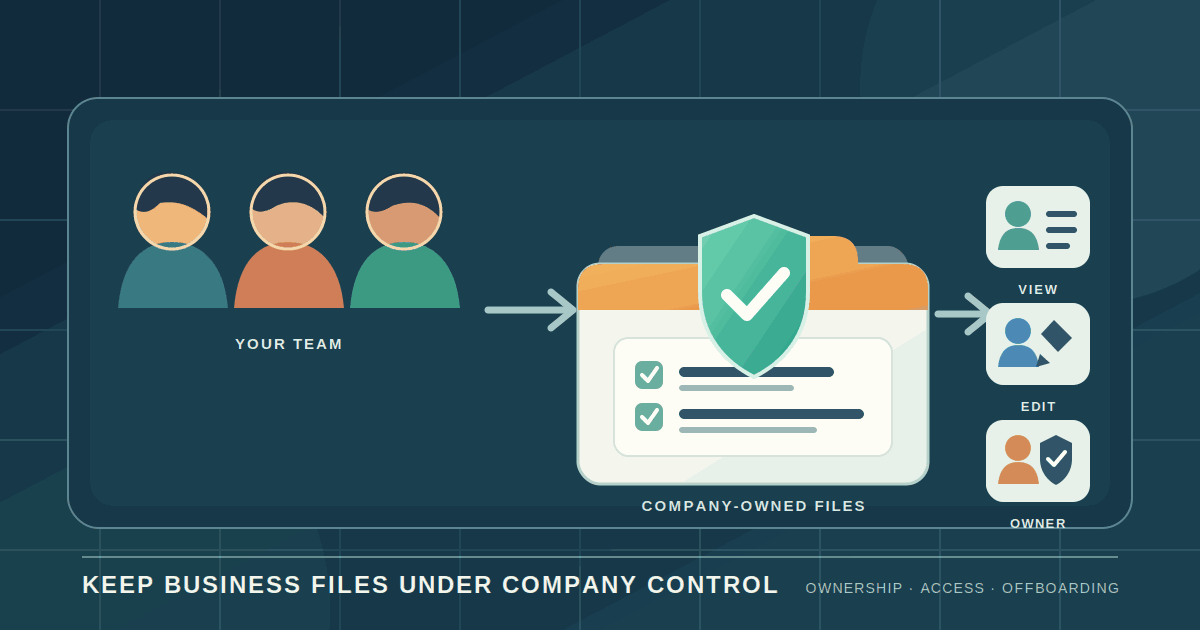
Where Should Your Business Files Live? Google Drive vs SharePoint
Choose a team-owned home for important business files. Compare Google Shared Drives and Microsoft SharePoint, set safer permissions and plan employee offboarding.
Read article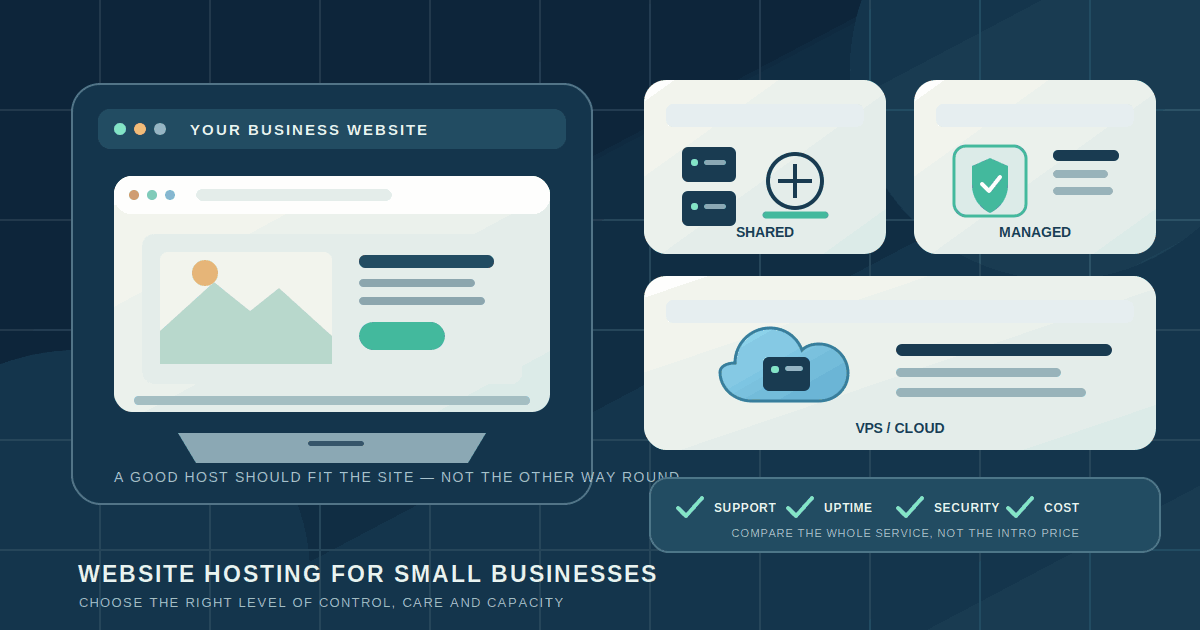
Website Hosting for Small Businesses: How to Choose
Compare shared, managed WordPress, VPS and cloud hosting for a small-business website. Learn what changes the real cost, reliability, support and migration effort.
Read articleLet's talk
Have an idea? Let's figure out how to build it.
You don't need a technical specification or a perfectly defined plan. Tell us what you're trying to achieve, and we'll help identify the next steps.